
Documentary wedding photography across the whole county, from someone who lives in the middle of it.
Alfred Thomas Photography is a Lancashire wedding photographer based in Leyland, covering the entire county from the Fylde coast to the Pennine edge. The photographer is Tom Carter, and the style is documentary: unposed, unhurried, and light on instructions. The two numbers are £1,063 for a whole wedding day and £623 for roughly four hours of one. Nothing is charged per image, nothing is charged for travel inside the county, and the finished gallery reaches you within six weeks.
The site mostly says Thomas, but Tom Carter is the name that goes on your contract. Anything you find filed under Johnston Photography is mine too; that name changed on 19 June 2026 and nothing else did. Below is the long version: how I work, what a full day looks like, every part of the county I cover, and the questions worth asking any photographer.
Documentary is a word that usually just means “not stiff” and stops there. The definition I work to is narrower: I photograph what happens, and I arrange as little of it as I can get away with. Three things do get arranged, and it is only fair to name them.
A short list of group photographs, eight to ten, agreed weeks ahead and worked through in about a quarter of an hour. Roughly twenty minutes for the two of you away from the crowd, booked against the light rather than the timeline. And once or twice I will say “stand there” and then stop talking.
The rest is distance. I work further back than a posed photographer does, often on a longer lens from across a room, because a camera two feet from a face changes what that face is doing.
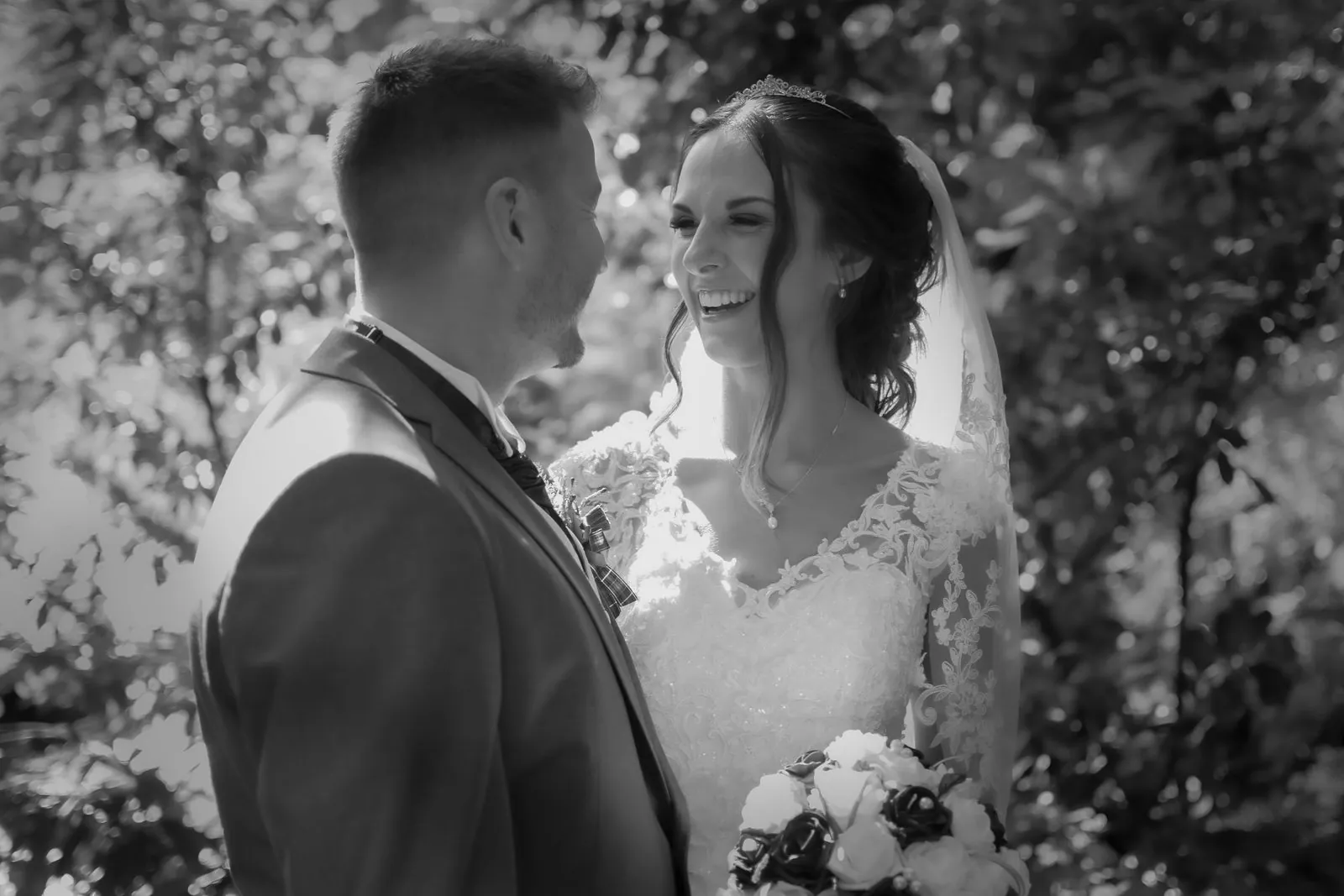
For your guests it means nothing is asked of them. Nobody is lined up along a wall and everyone keeps hold of their drink. Rooms take about twenty minutes to forget a photographer is in them, and by the speeches most people have stopped registering the camera, which is when the pictures start being worth keeping.
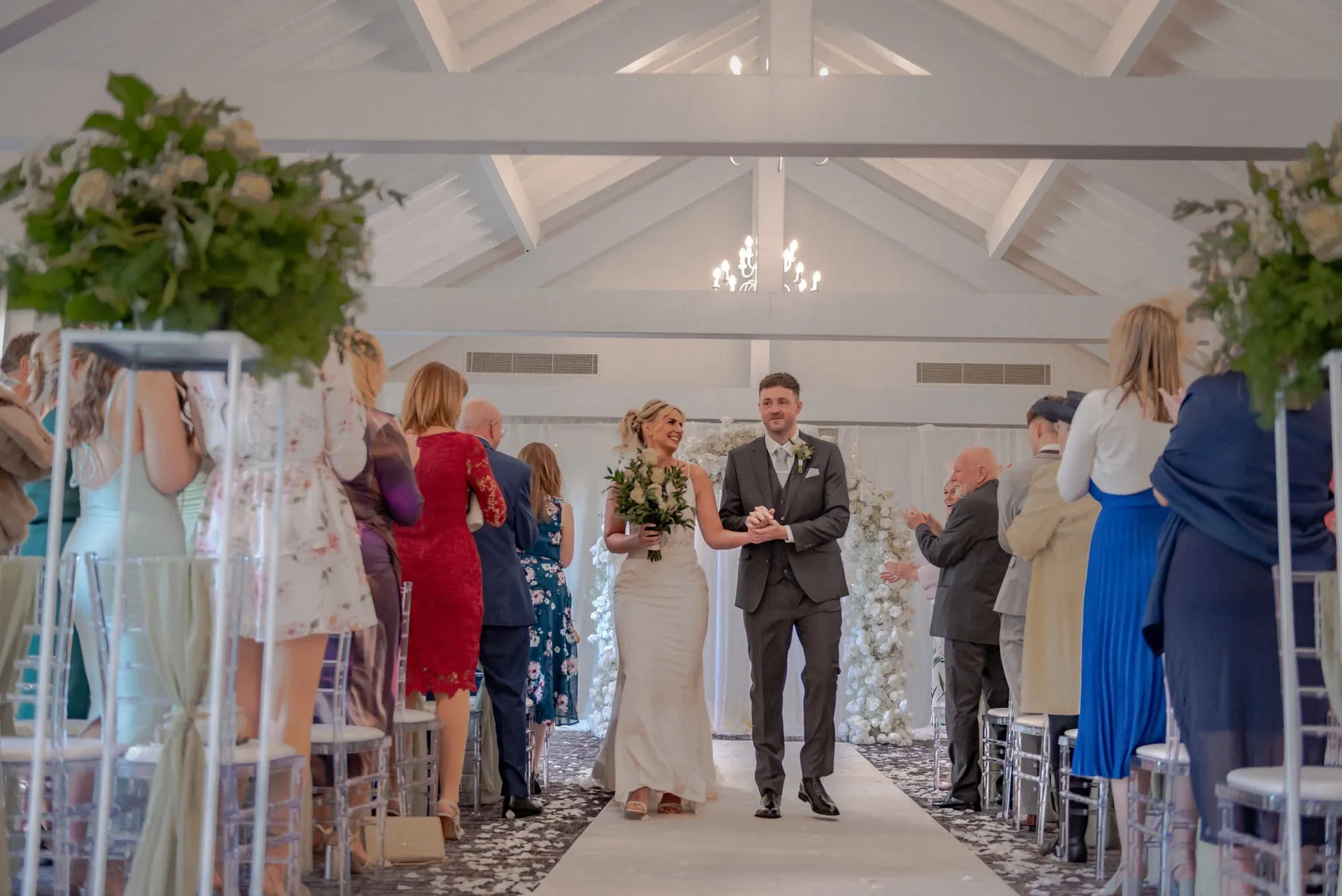
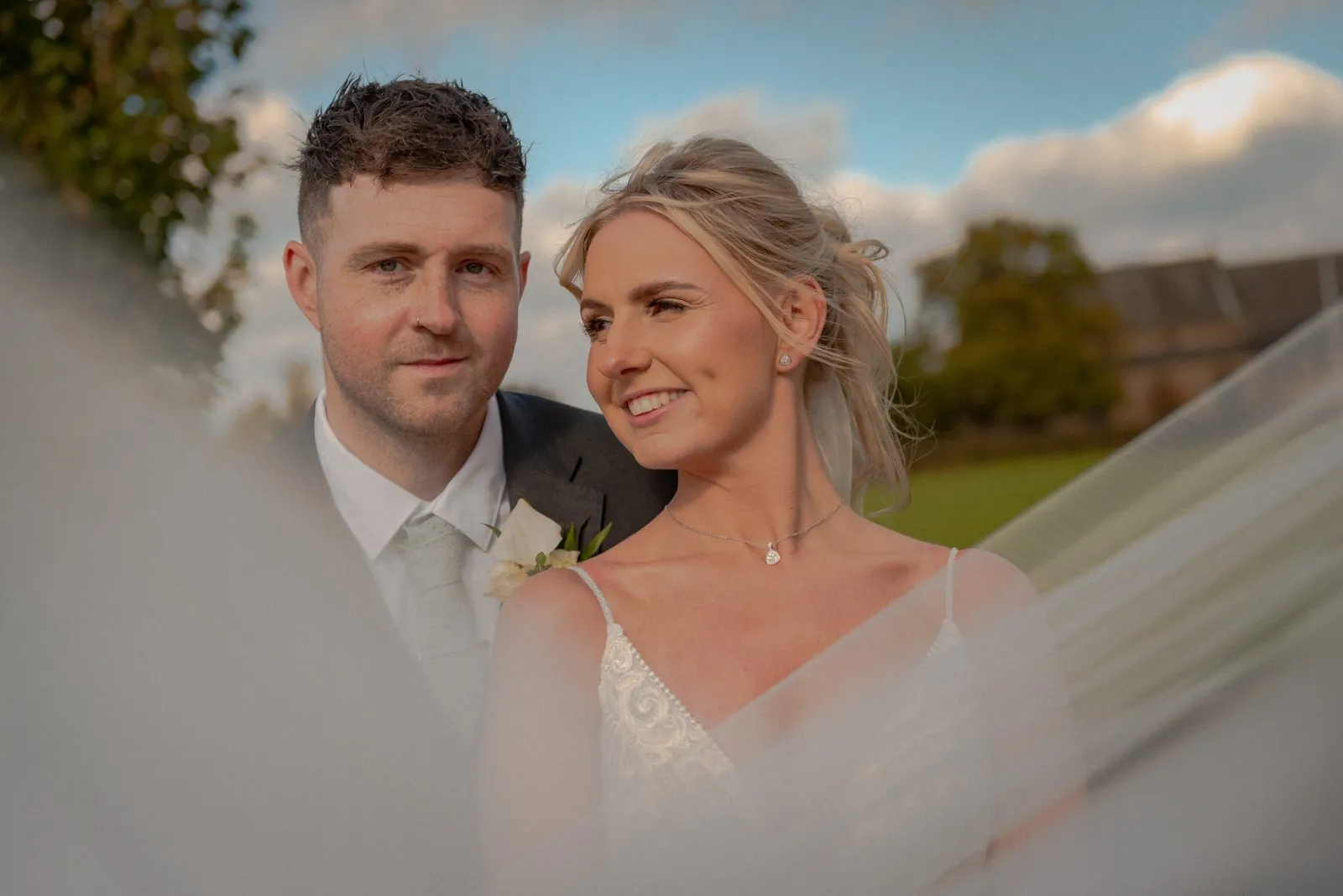
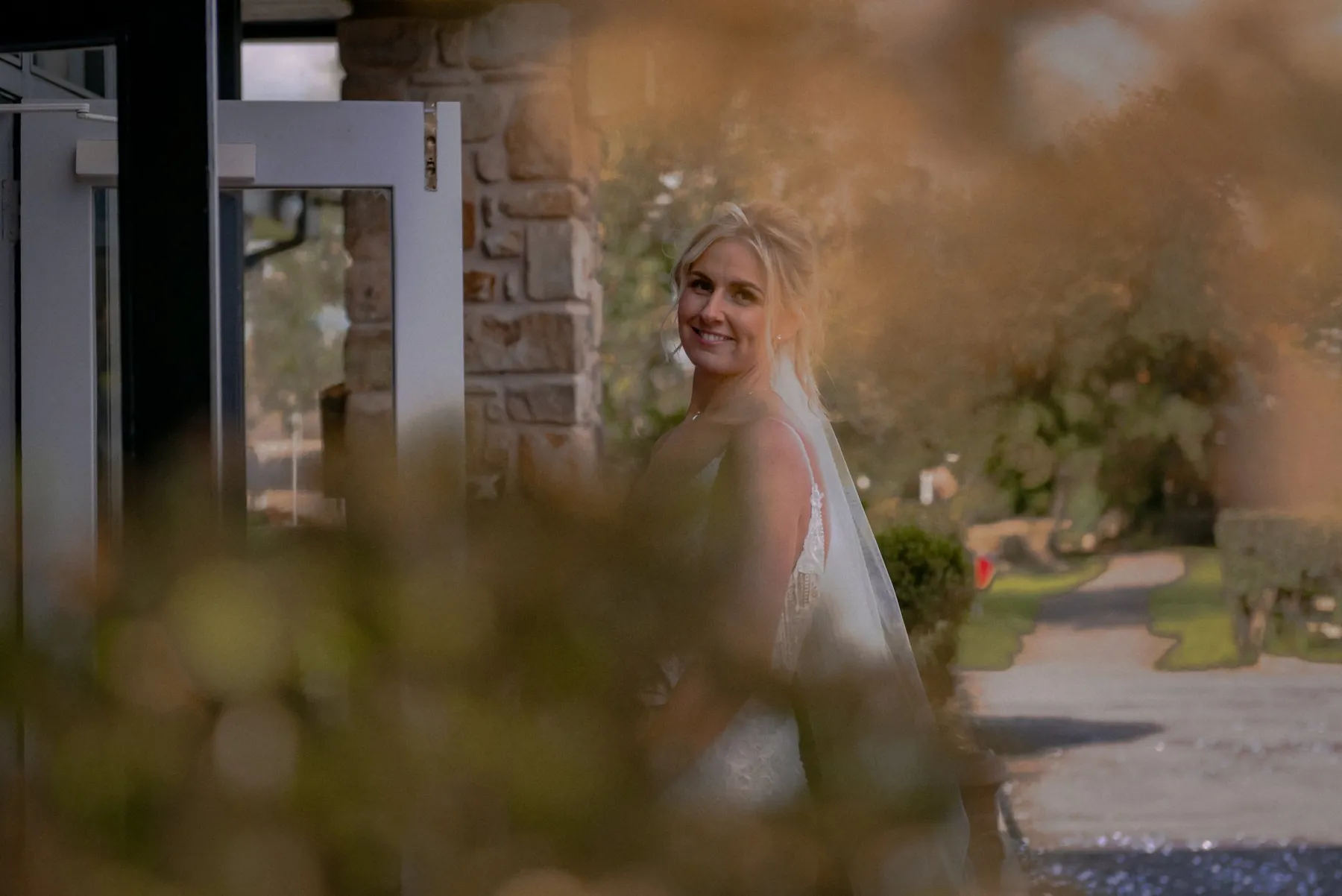
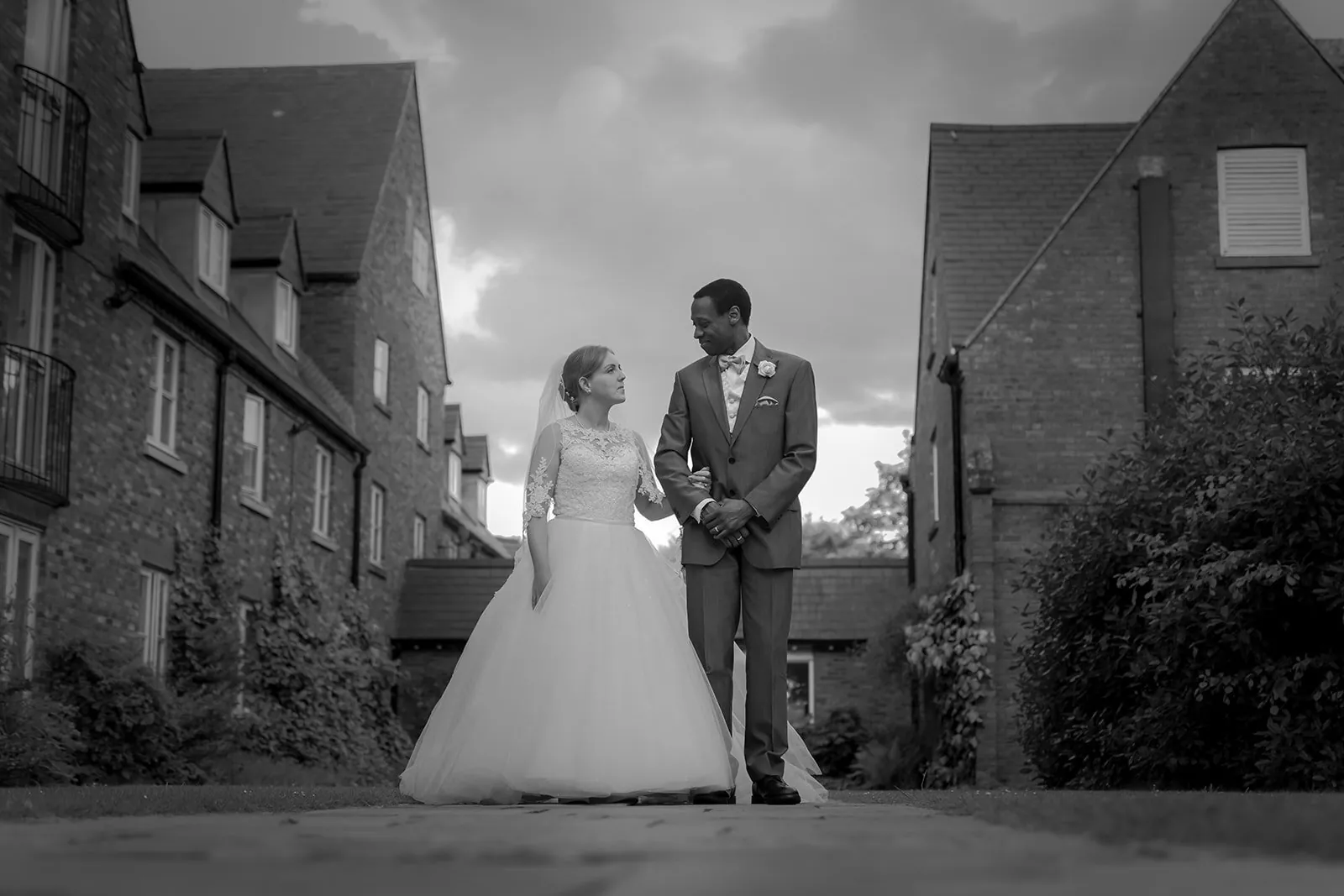
This is the shape most full days take. Yours will differ; the thinking will not.
Two and a half hours before the ceremony. I arrive at the preparations and the first thing I do is not lift a camera. I find the window. One good window settles where the dress goes on and which corner I keep returning to. Rings, shoes and flowers take ten minutes, not an hour. While the dress goes on I am usually pointing the camera at somebody else: your mother's face is the photograph.
Forty minutes before. I leave ahead of you so I am inside when you arrive, and spend it on two conversations: the vicar or registrar, who tells me where I may stand and whether I may move at all during the vows, and the coordinator, who tells me when the room turns over.
The ceremony and the hour after it. I work from the side on a silent shutter and spend the vows watching whoever is not speaking. Signing the register is staged at every wedding in the country, so I keep it brisk. Confetti happens once, with the light behind you. Then the drinks hour, which most weeks holds the best frames in the gallery.
Groups, portraits, the meal. The agreed list runs while everyone is still findable, then you get your twenty minutes somewhere quieter. I photograph the dining room before a guest is in it, and once the speeches start I am mostly turned away from the speaker, because the best man's joke lands on his father's face rather than his own.
Golden hour, then the dancefloor. If the sky is doing anything I will ask for ten minutes between the pudding and the first dance, because the light shifts more either side of sunset than across the whole afternoon before it. After that: a slow shutter, bounced flash, half an hour of dancing.
The numbers and the comparison tables live on the Lancashire wedding photography prices page. What a price list cannot show is the part of the job that never appears as a line item.
Beyond those two packages there is a £149 charge for bringing a second shooter, and the same again for a pre-wedding session. Neither is necessary. More about who you would be booking is on the about page.
Leyland sits close to the middle of the county, which is the practical reason travel is included.
Five venues also have a planning guide here, written for couples still deciding.
A venue outside those five changes nothing; more of the work is in the portfolio.
This part is not about me. Wedding photography is a one-take job paid for months in advance. Put these to whoever you talk to, including me.
My own answers are on the about page. If a photographer goes vague on any of them, that is information too.
Lancashire sits at roughly 53.7 degrees north, and that number shapes your photographs more than your venue does. Between the shortest day and the longest, the county gains nearly ten hours of light.
February brings sunrise around half past seven and sunset around quarter past five, with the sun never climbing above about 23 degrees. Less bleak than it sounds: low sun all day means no harsh overhead shadow, which is exactly what a June noon cannot offer. Just be out of the ceremony by half past two.
Late December takes that to its limit — sunset around ten to four, barely seven and a half hours of daylight, the sun never above 13 degrees. Effectively the whole day is golden hour; there is just very little of it. Late June reverses everything: sunset at a quarter to ten, and a midday sun near 60 degrees that makes a bright June lunchtime the least forgiving light of the year.
September is the counter-intuitive one, and my favourite month here. Sunset lands around quarter past seven and the midday sun is far kinder than June, but the warm window before it is the shortest of the year: close to the equinox the sun drops at its steepest angle, giving roughly 45 minutes against about an hour in late June and over 70 at the winter solstice.
One last thing to plan around: the clocks go back on 25 October 2026, so a wedding on the final weekend of October loses an hour of evening light overnight.
A full wedding day with Alfred Thomas Photography is £1,063 and a four-hour half day is £623. Both figures are all-in: every edited photograph, unlimited planning chats, a six-week delivery, and no travel charge inside the county.
All of it. I work from Leyland, close to the middle of the county, and photograph weddings in Preston, Chorley, the Ribble Valley, Garstang, Longridge and the Fylde coast. No zone map and no mileage line.
Photographing what happens rather than arranging what happens. Only three things are directed on my weddings: an agreed list of about ten group photographs, twenty minutes of couple portraits, and the occasional instruction to stand somewhere.
No total is promised and none is capped. Every frame worth keeping is edited and handed over, so what you receive depends on how long your day runs, not on which package you chose.
The complete gallery is with you inside six weeks, with a handful of favourites much sooner. That is how long a careful edit of an entire day takes.
Yes, and I would rather do them quickly than pretend they do not matter. We agree the list beforehand, eight to ten groupings, and you nominate a relative who can recognise everybody.
Most couples do not. The £149 earns its keep in three situations: two getting-ready locations far apart, a guest list comfortably over 120, or a ceremony room where one person cannot cover the aisle and your faces at once.
We photograph a wet wedding instead of a dry one. Every booking gets a sheltered portrait location worked out alongside the open-air one, so bad weather usually moves the portrait slot rather than cancelling it.
Send your date and venue through the contact page or on WhatsApp and I will answer within a day or two, including when the answer is that I am already booked. A deposit of a booking deposit then confirms it.
Tell me when and where, and I will come back with a yes or a no.
Check your date